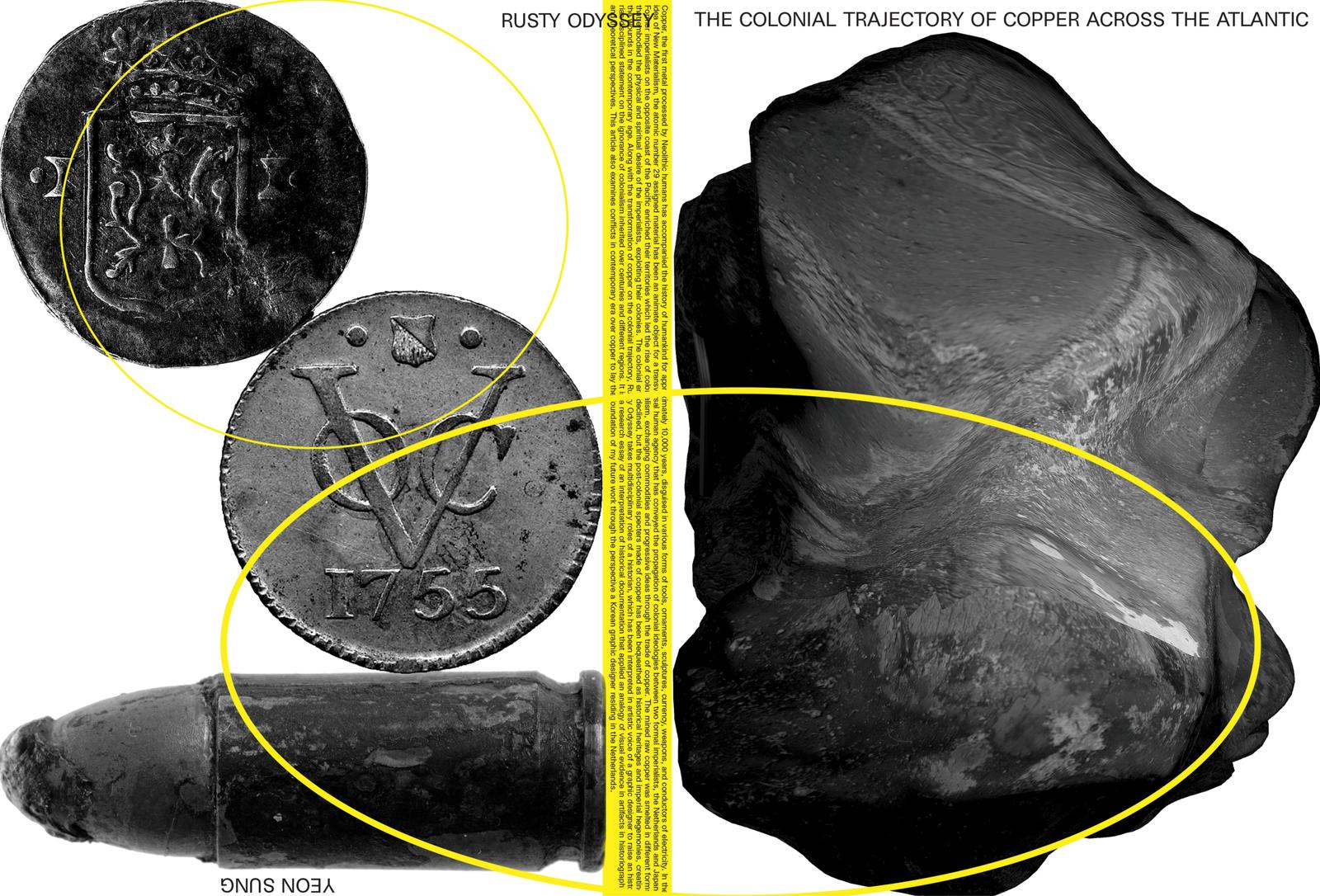
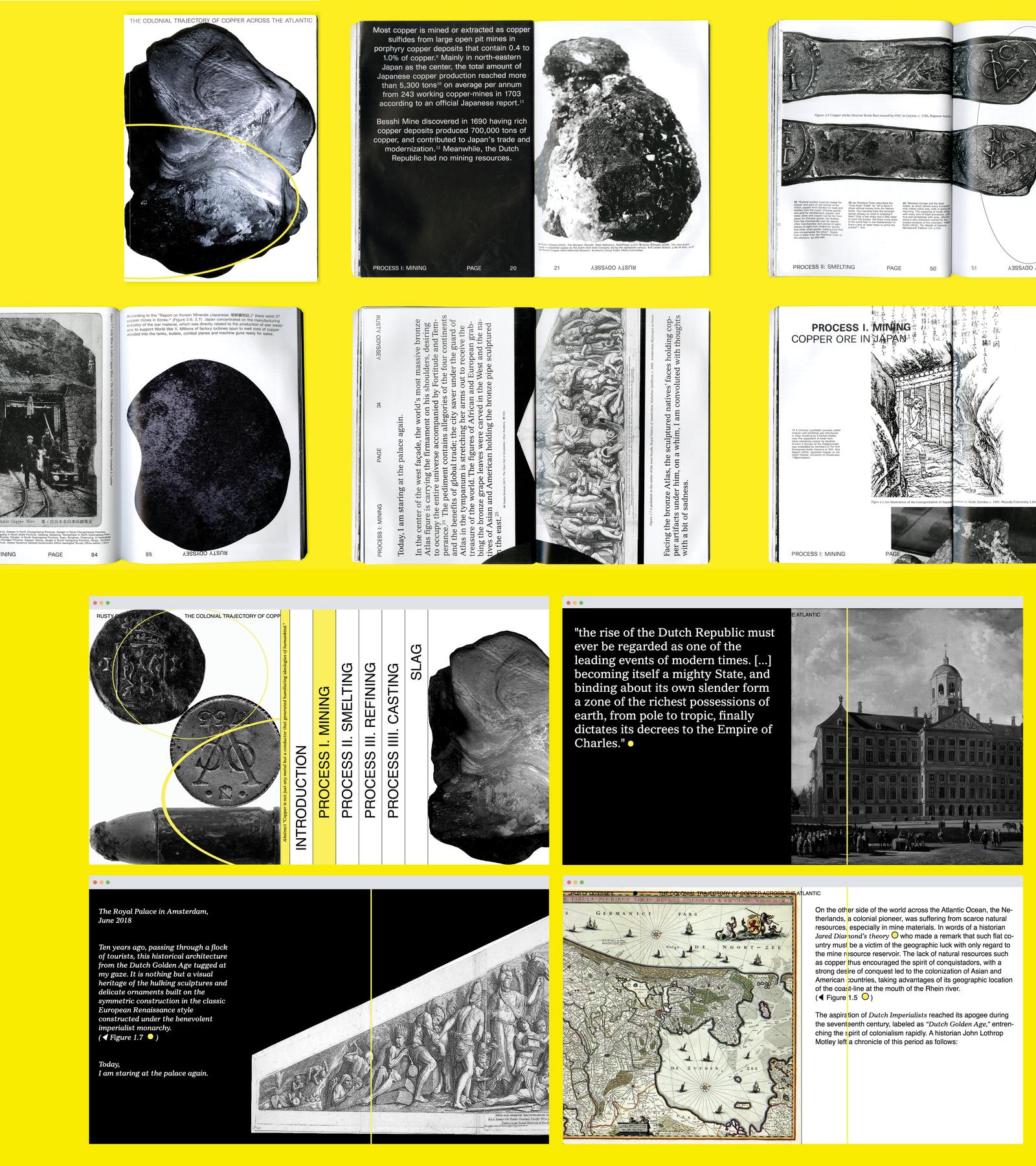
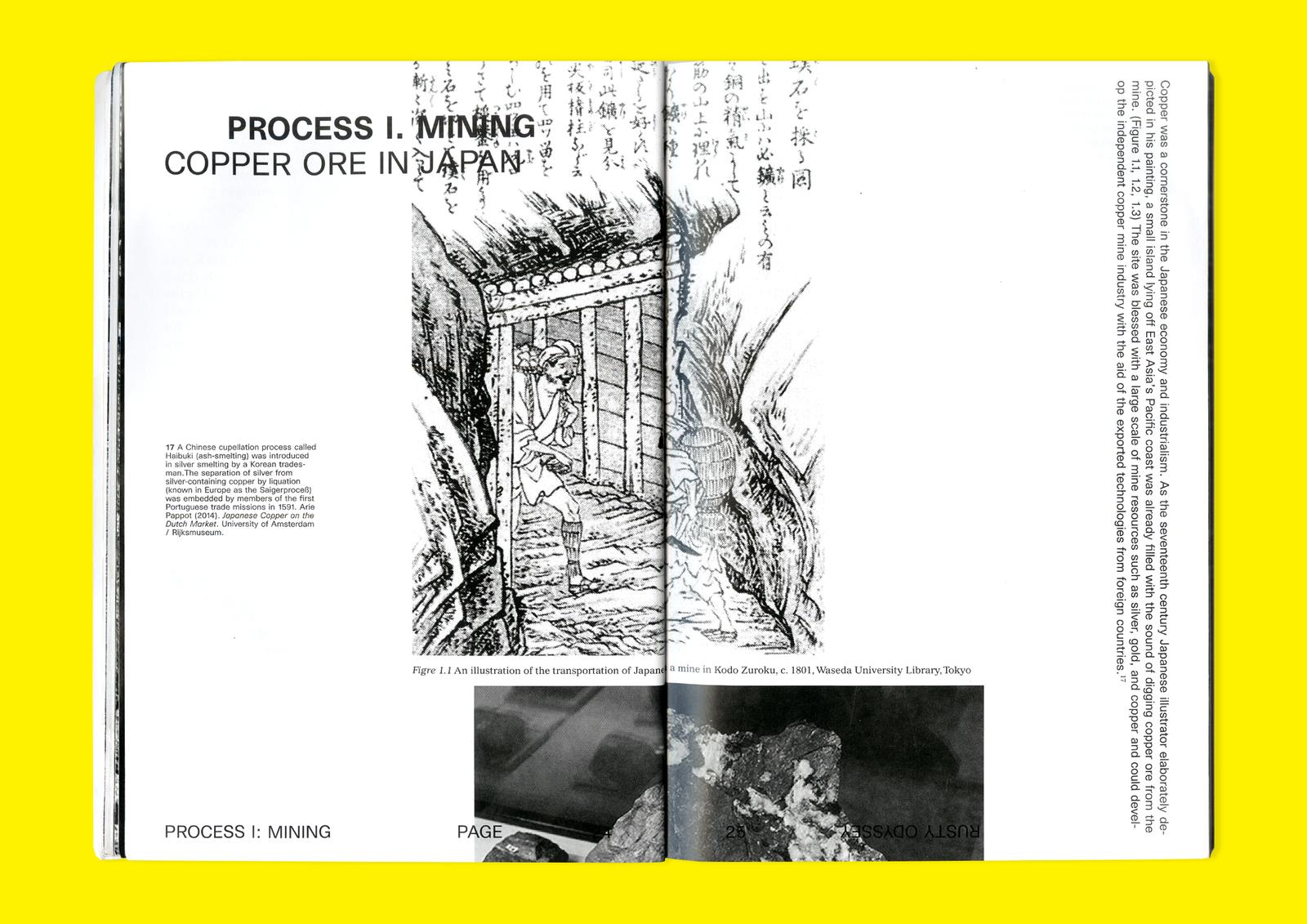
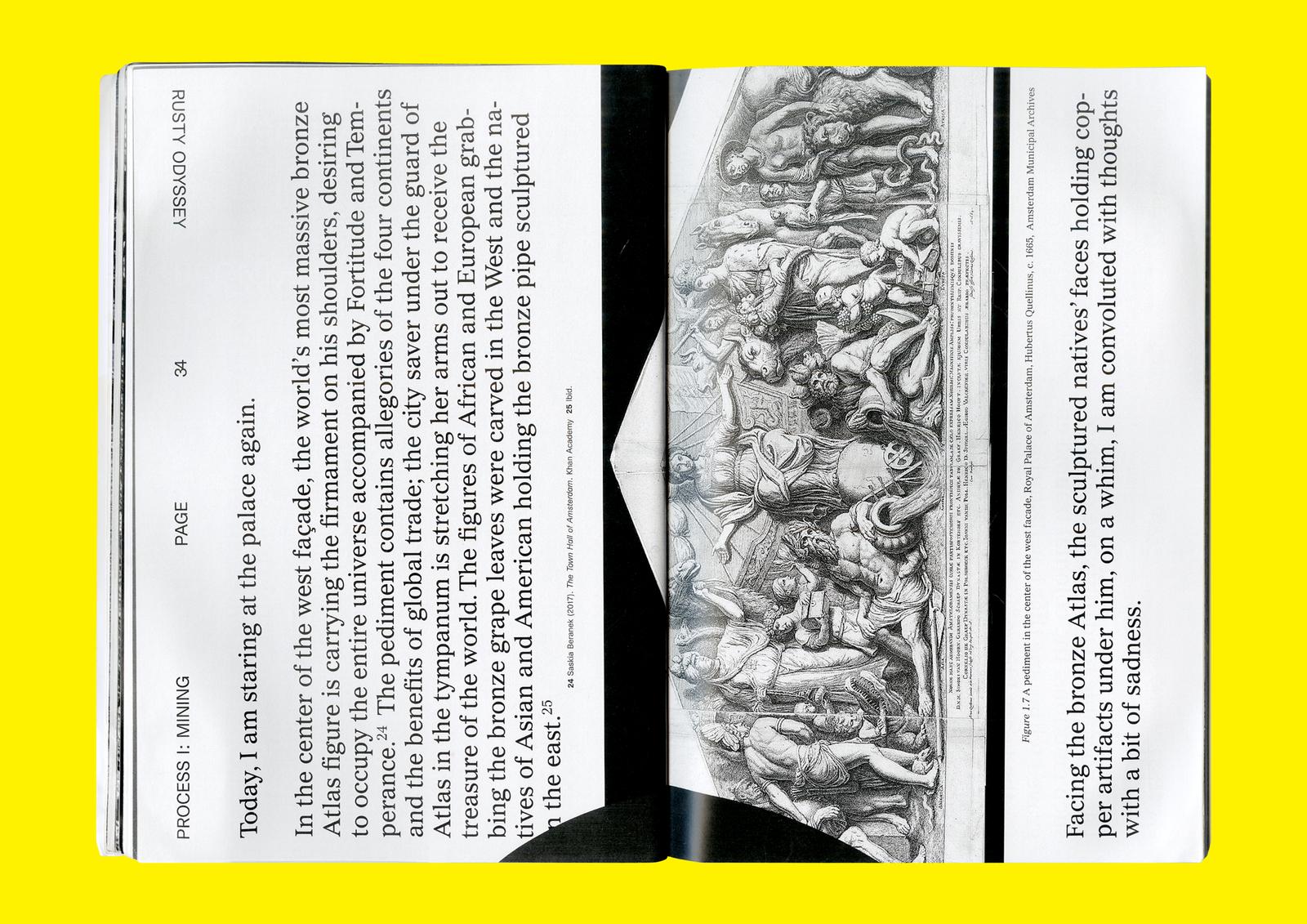
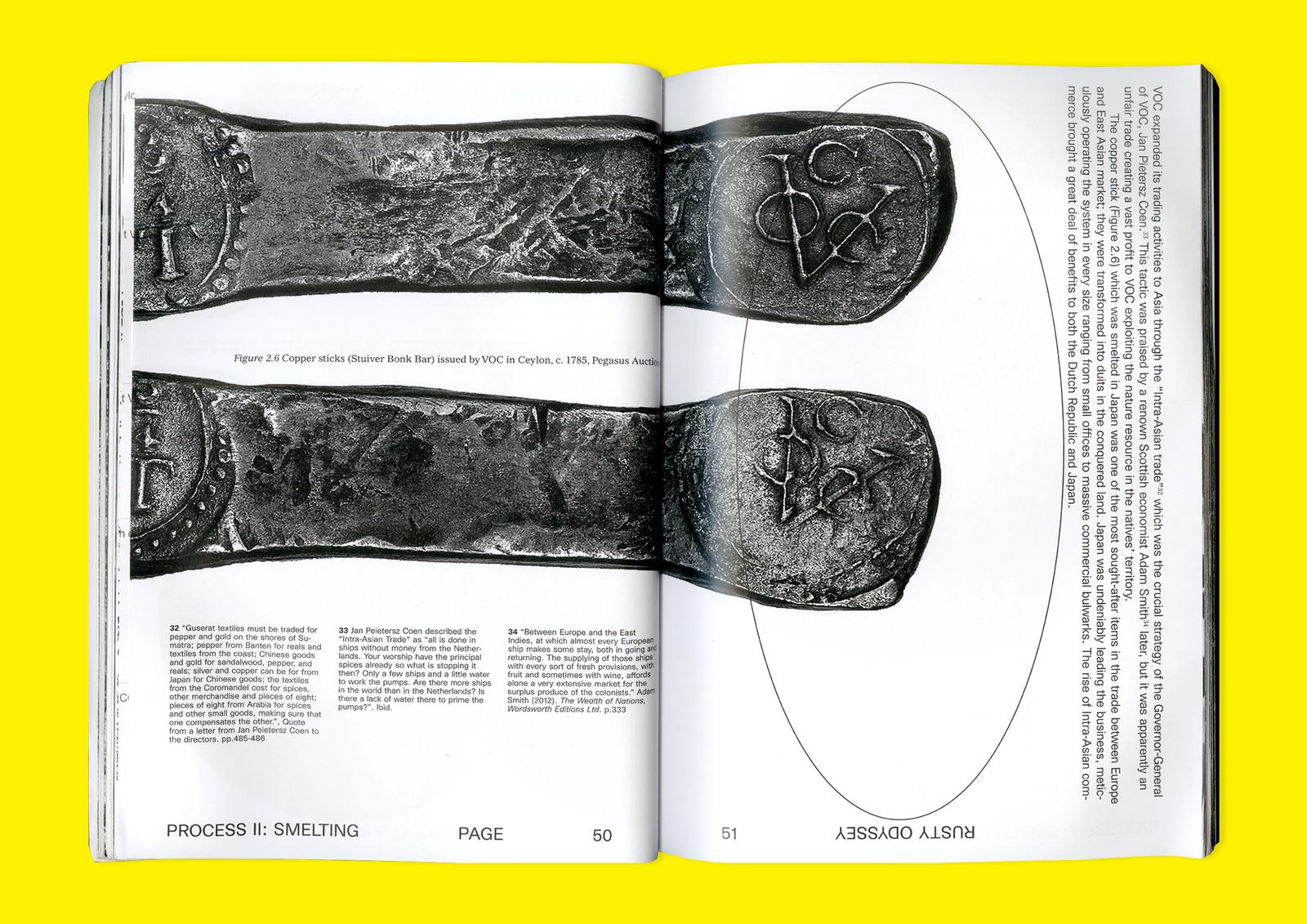
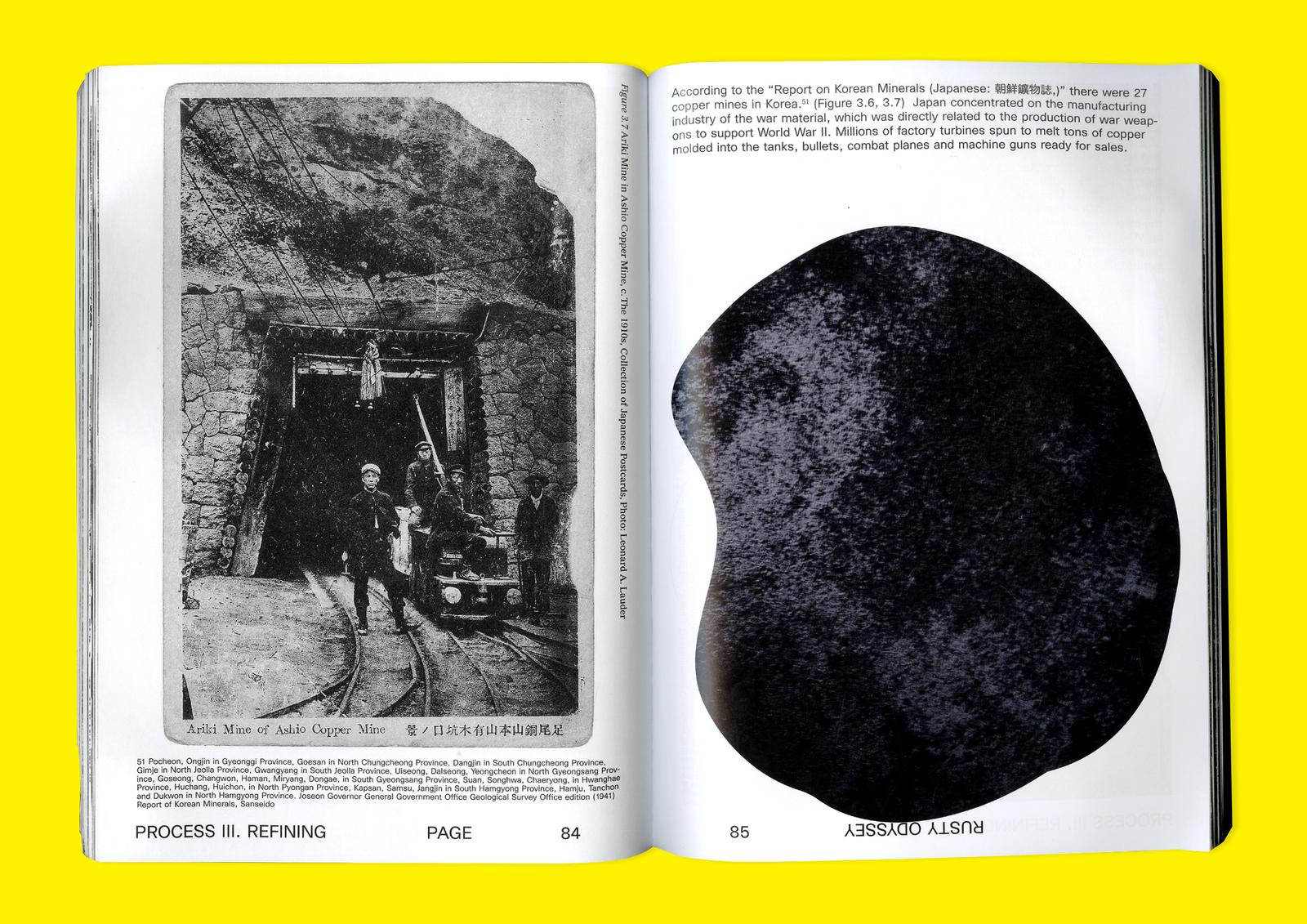
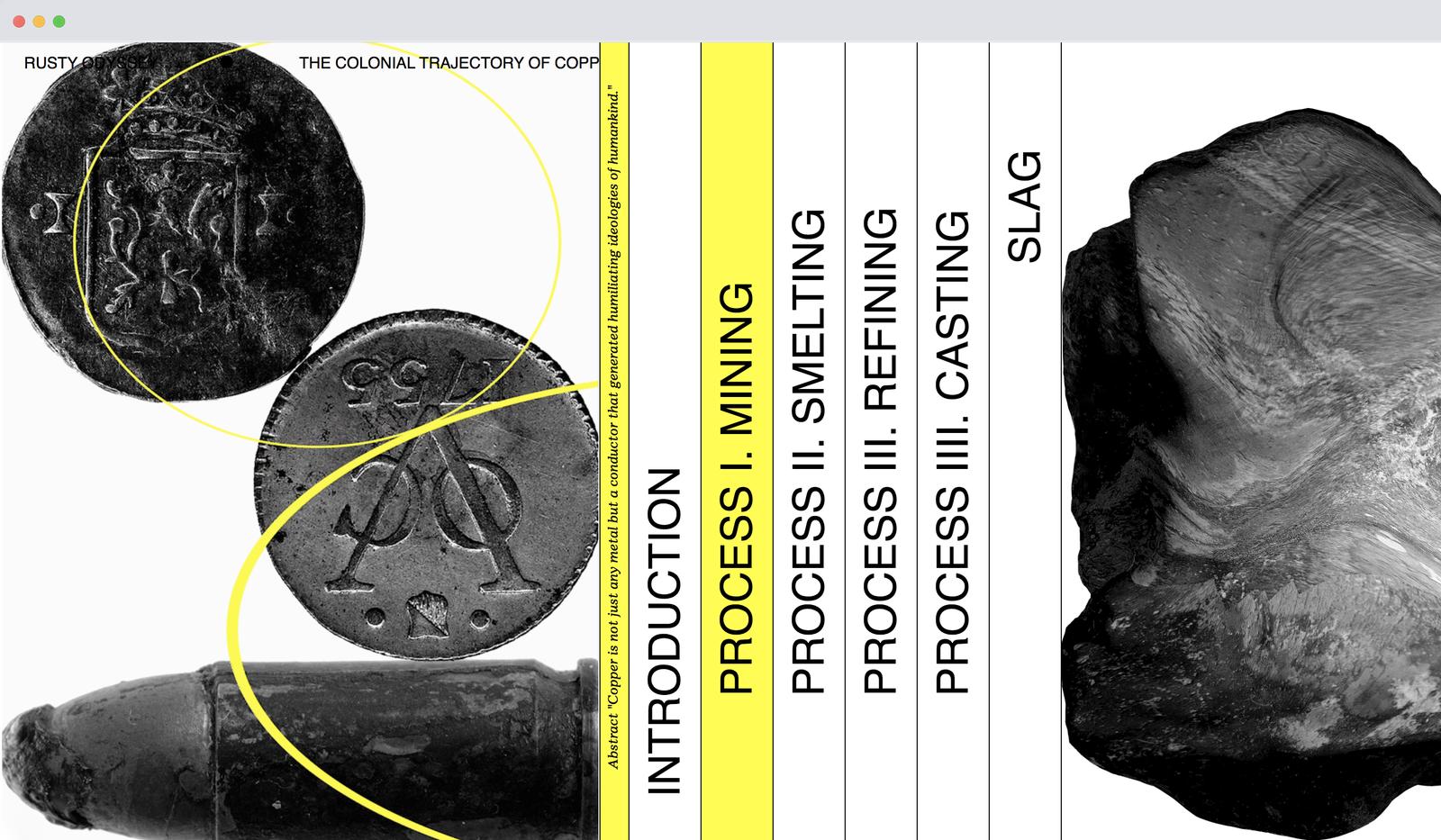
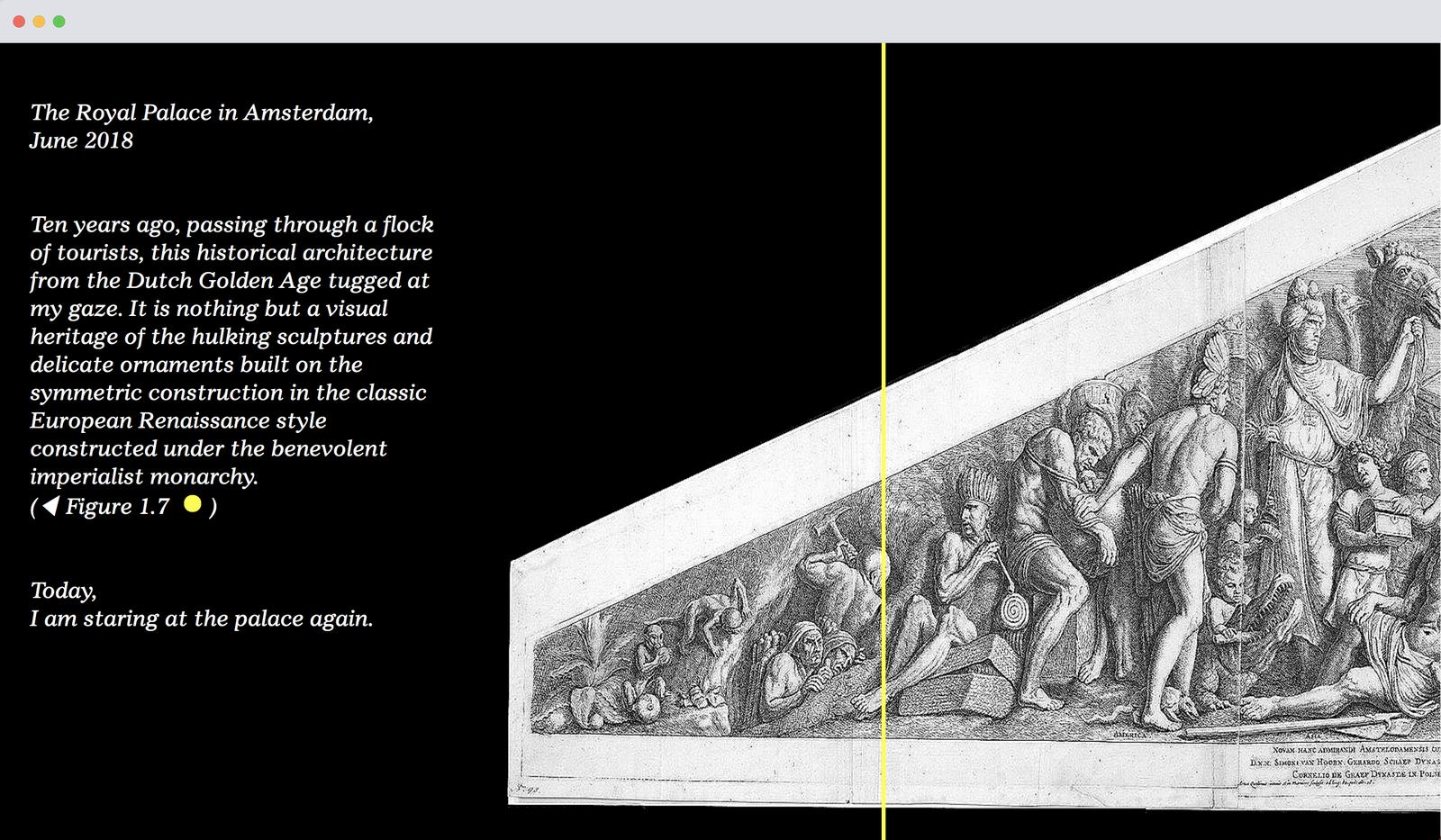
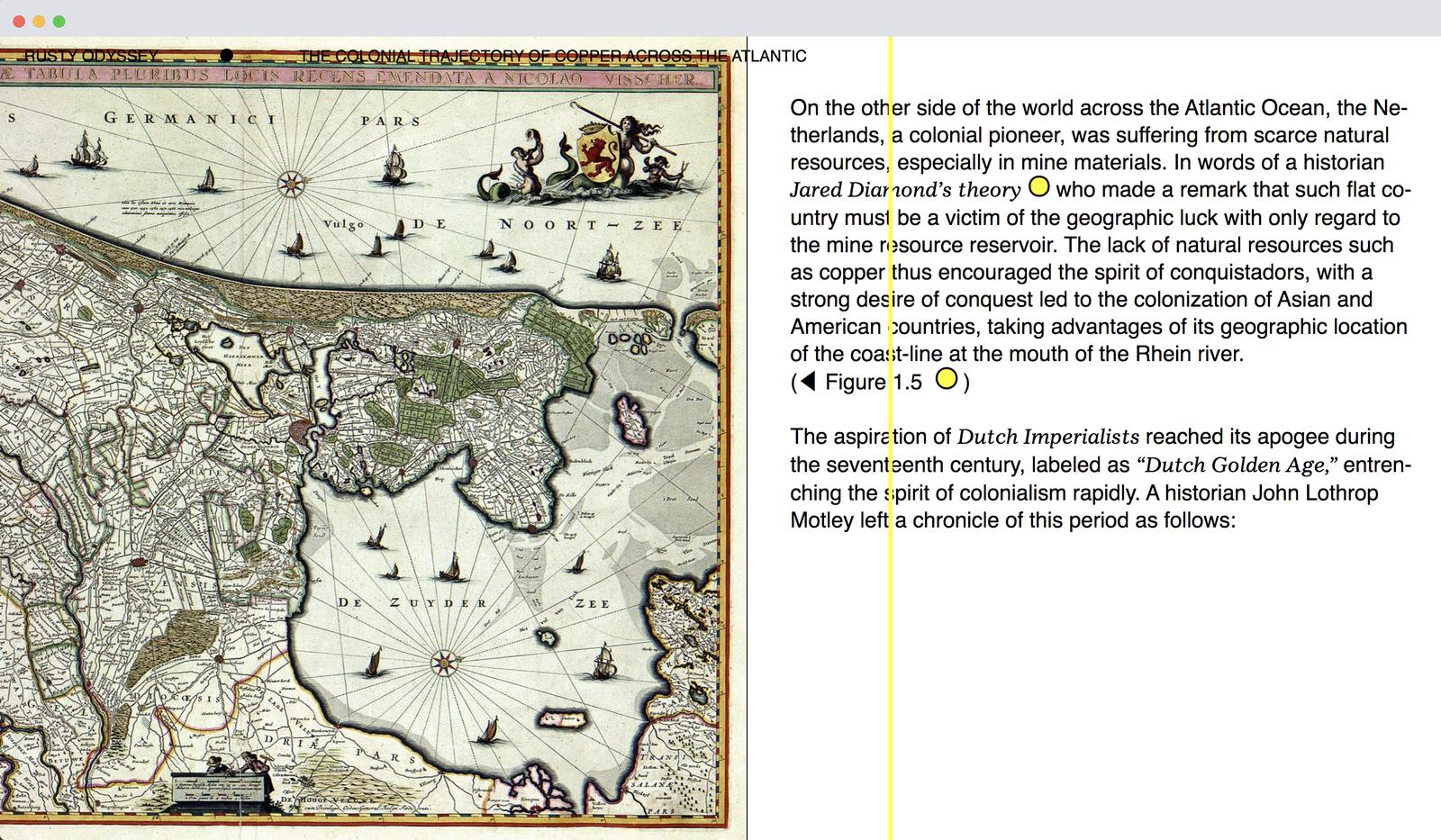
Copper, the first metal processed by Neolithic humans, has accompanied human history for approximately 10,000 years, disguised as tools, ornaments, sculptures, currency, weapons, and conductors of electricity. From the perspective of New Materialism, this material, assigned atomic number 29, has been an animate object through which transversal human agency spread colonial ideologies between two former imperial powers, the Netherlands and Japan.
These former imperial powers, on opposite coasts of the Pacific, enriched their territories by exchanging commodities and progressive ideas through the copper trade, and this exchange led to the rise of colonialism. Mined raw copper was smelted into different forms that embodied the physical and spiritual desires of the imperialists as they exploited their colonies. The colonial era declined, but its post-colonial specters, made of copper, have been handed down as historical heritage and imperial hegemony, leaving wounds that persist today.
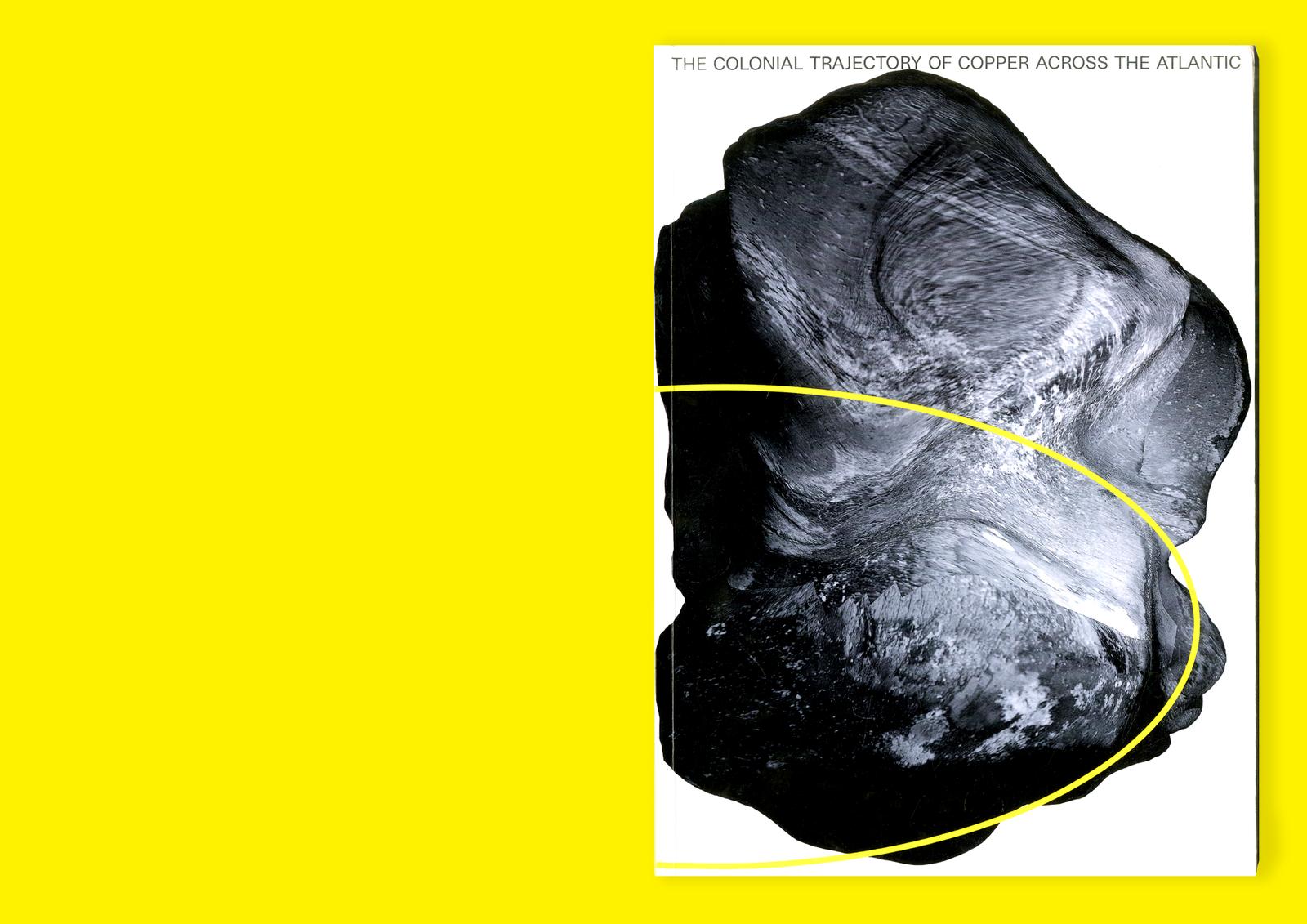
Following copper's transformations along its colonial trajectory, Rusty Odyssey takes on the multidisciplinary roles of researcher and artist. It directs statements grounded in historical scholarship, interpreted in an artistic voice, at an ignorance of colonialism that has been inherited across centuries and regions. This article also examines contemporary conflicts over copper to lay the foundation for the experimental documentary Rusty Odyssey, from the perspective of a Korean artist residing in the Netherlands.
Text, Research, Graphic Design, Web Development
Yeon Sung
Proofreading, Translation of Korean Sources
JaeEun “Jane” Lee
Thesis Tutoring
Füsun Türetken
Typography Tutoring
Matthias Kreutzer
2025
Mineral Media: Artist Colloquium, Humaninfrastructure, Seoul, KR
Artist Talk: Rusty Odyssey, Gäro lab, Seoul, KR
2020
Besides the Screen 2020 Conference, Porto, PT
2019
The Second PIN (Postcolonial Studies Initiative) Network Conference, Intellectuals Across Borders: Writers, Artists, Activists, Münster, DE