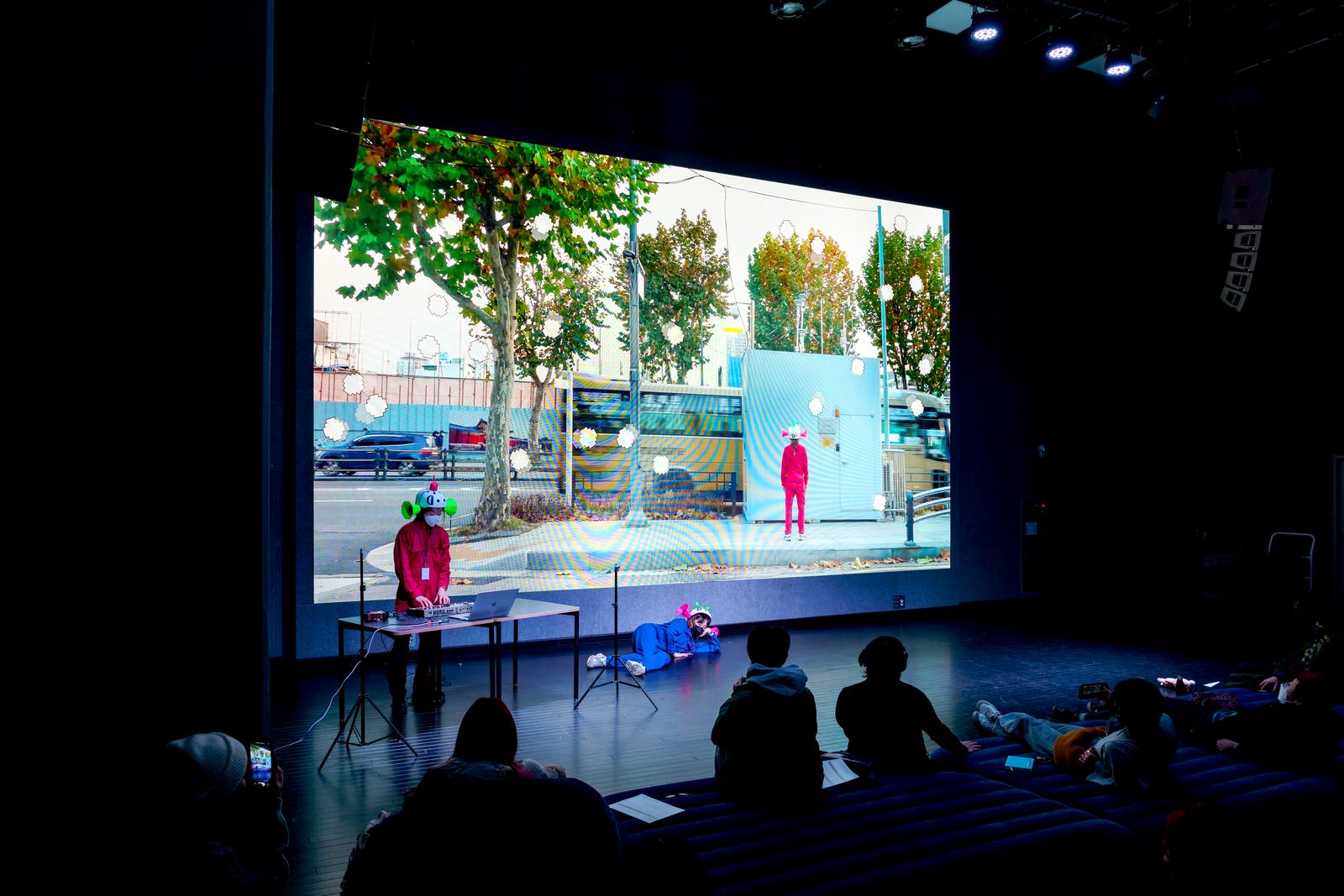
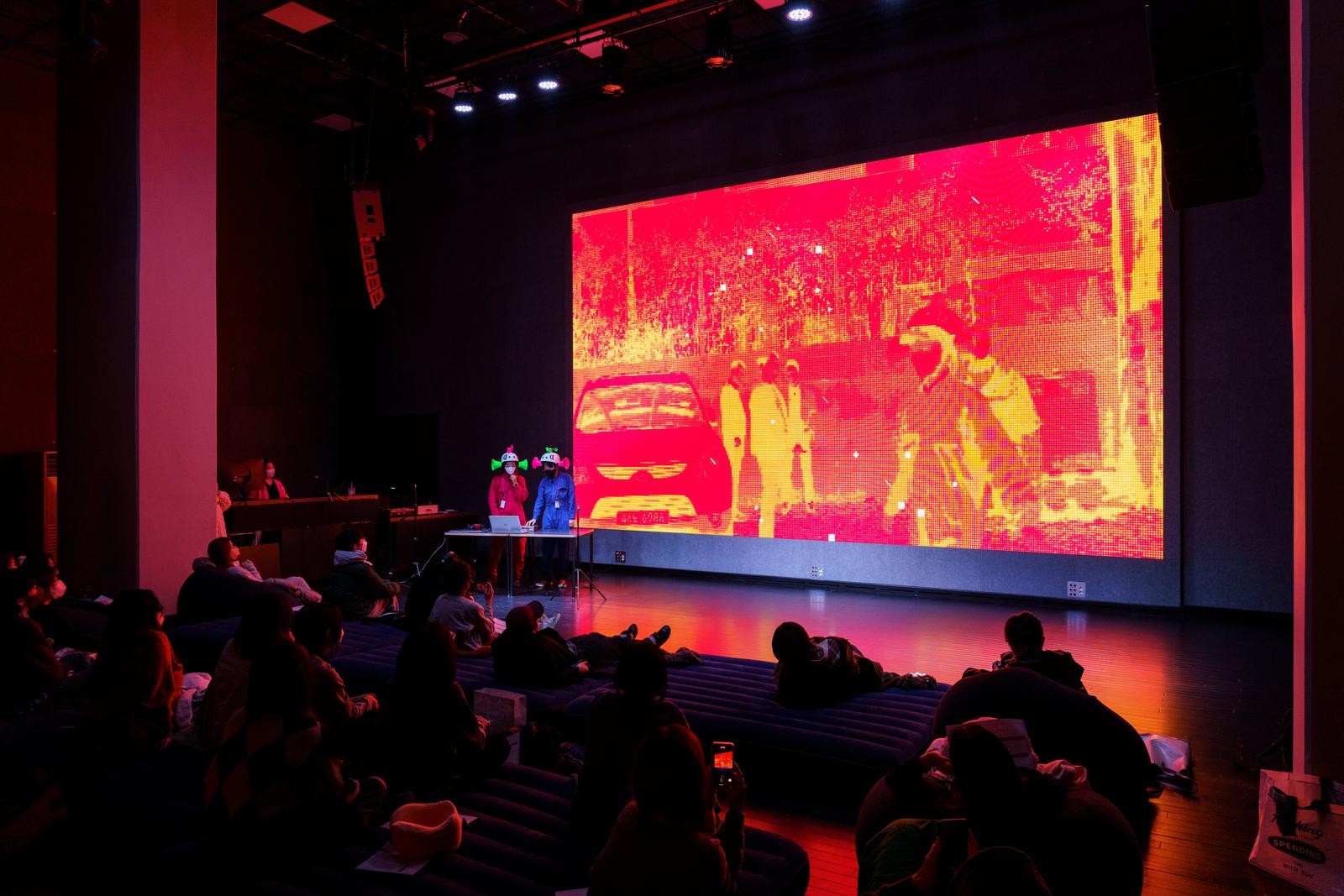
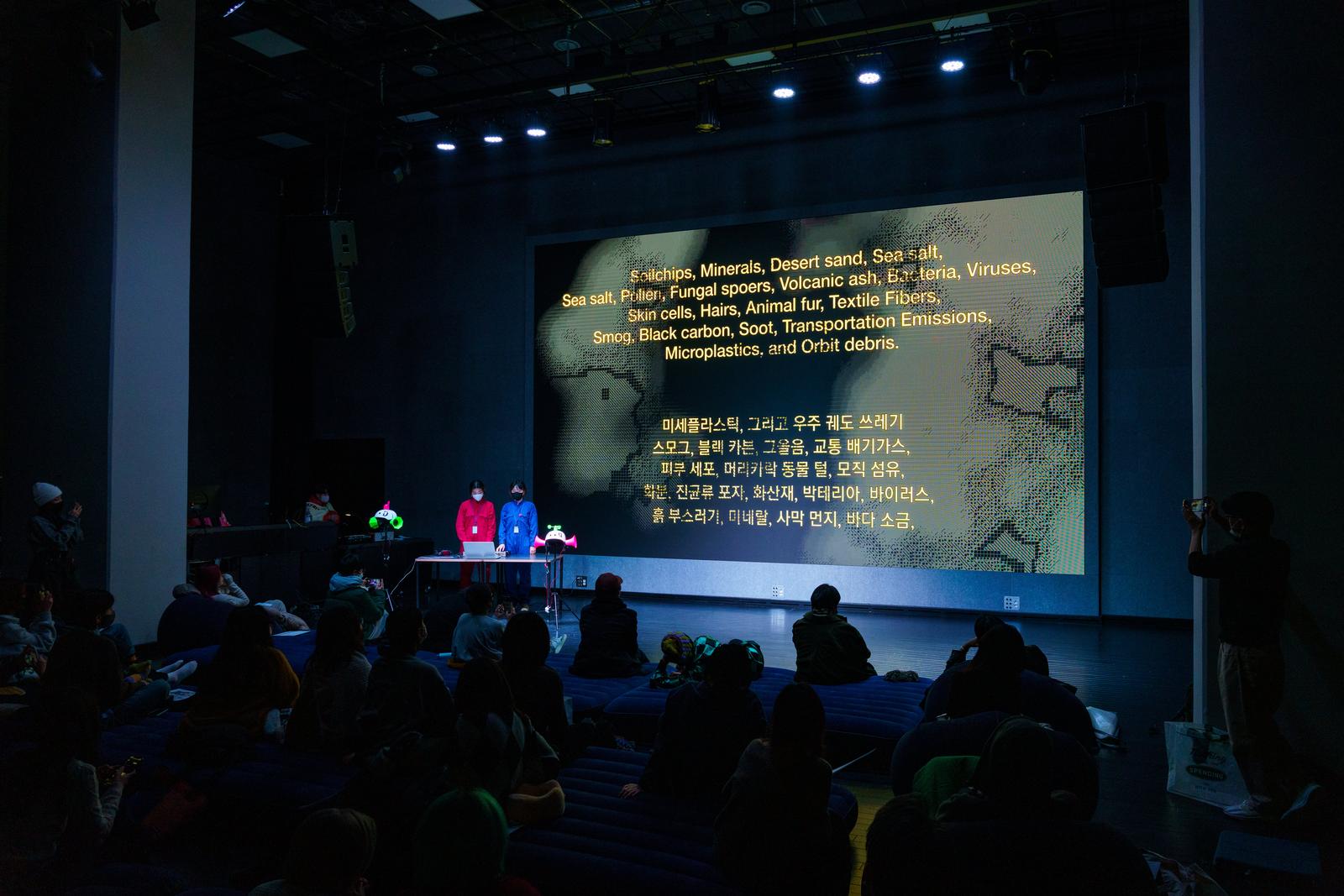
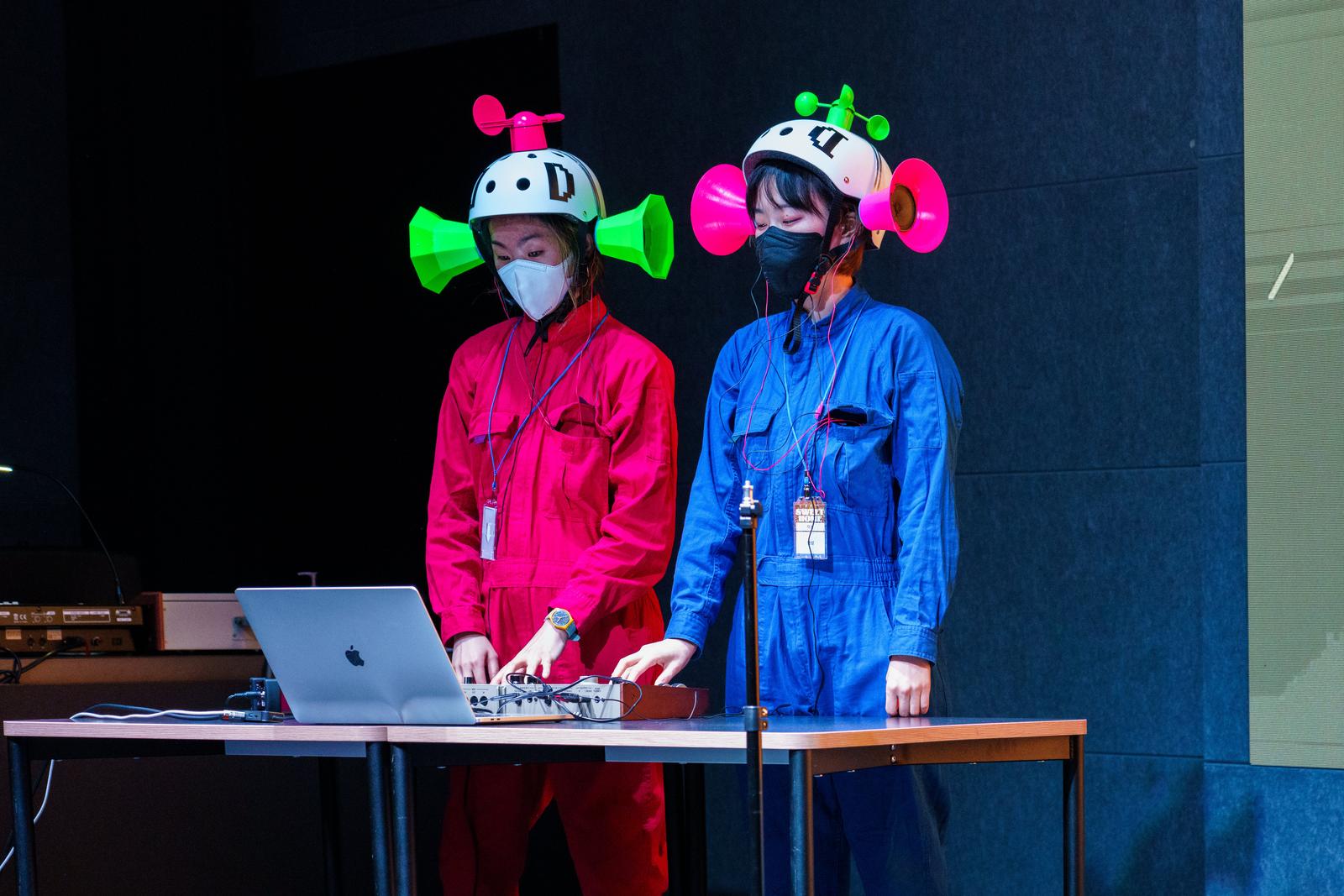
D: D-D-D opens with two people speaking before they speak as themselves. Yeon Sung and Mina Kim take the names diː and dɪ, the two ways an English speaker pronounces the letter D, and stand in for the very substance the piece is about: something so diffuse and interchangeable that even its own initial splits into two sounds. Before naming the sources of fine dust (soil, sea salt, pollen, soot, skin, plastic), the performance names the instruments that measure it. The performers recite Seoul's monitoring stations and their hourly output until the count turns into a chant: over 600 stations, more than five million readings a year, numbers precise enough to trigger a public alert and empty enough to say nothing about what dust actually is.
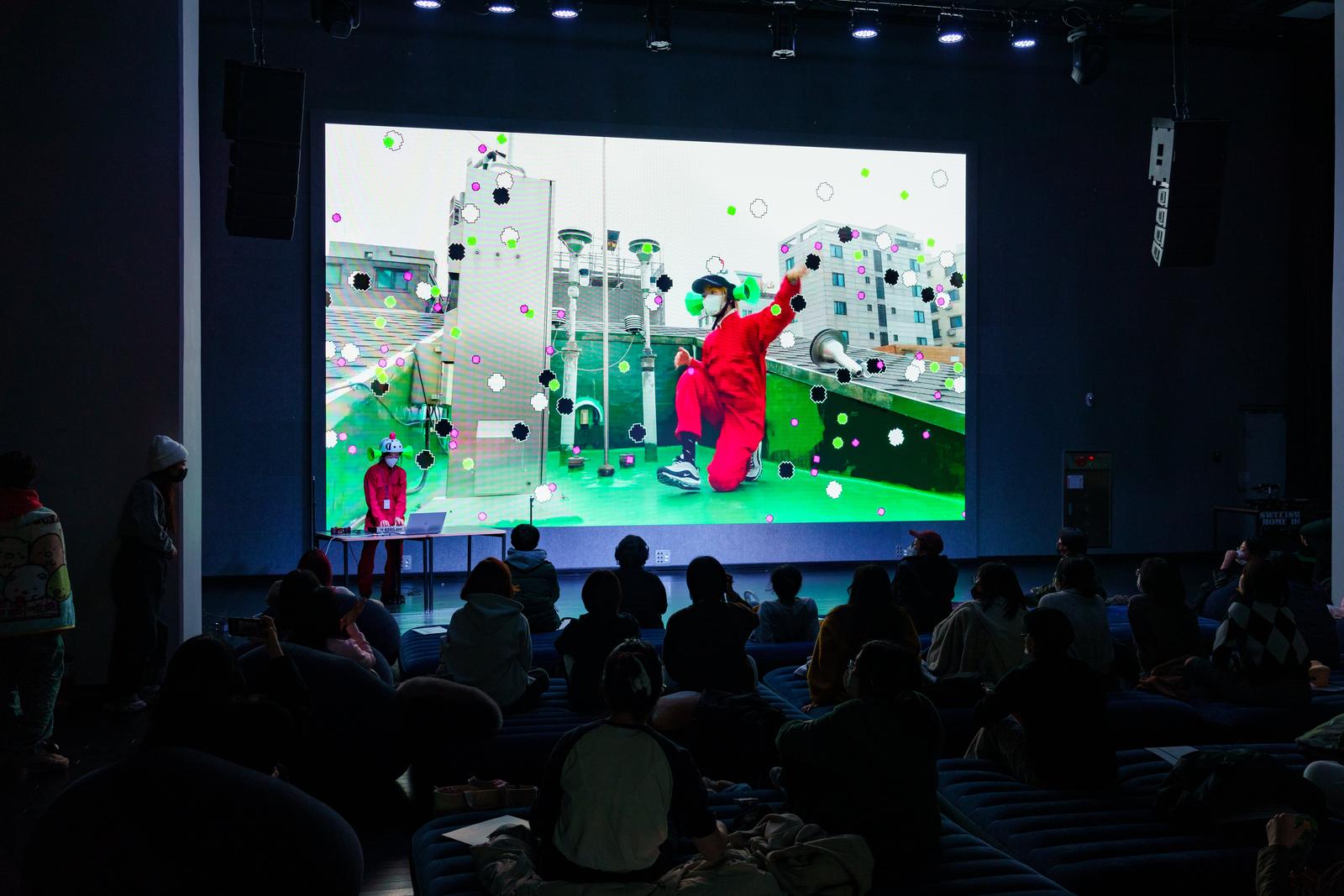
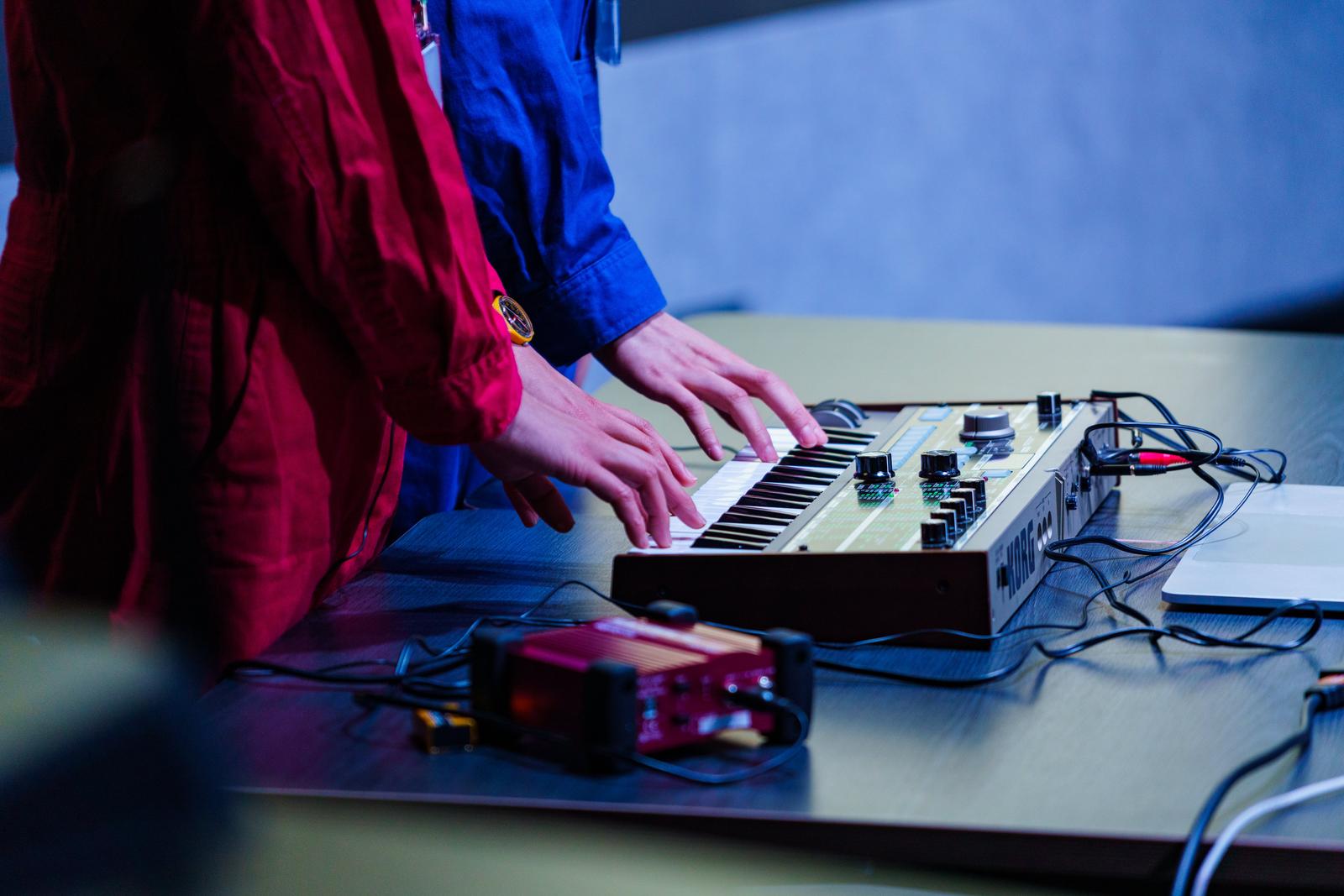
The recitation does not stay at the podium. diː and dɪ put on D-Beacon, an instrument they built themselves that converts wind into sound, and follow its signal on foot toward the places the recitation had been describing all along: monitoring stations tucked onto the rooftops of welfare centers, out of everyday sight. What began as two voices reading numbers ends as two bodies walking toward a source, then turning to face the audience and dancing what the walk found rather than explaining it.
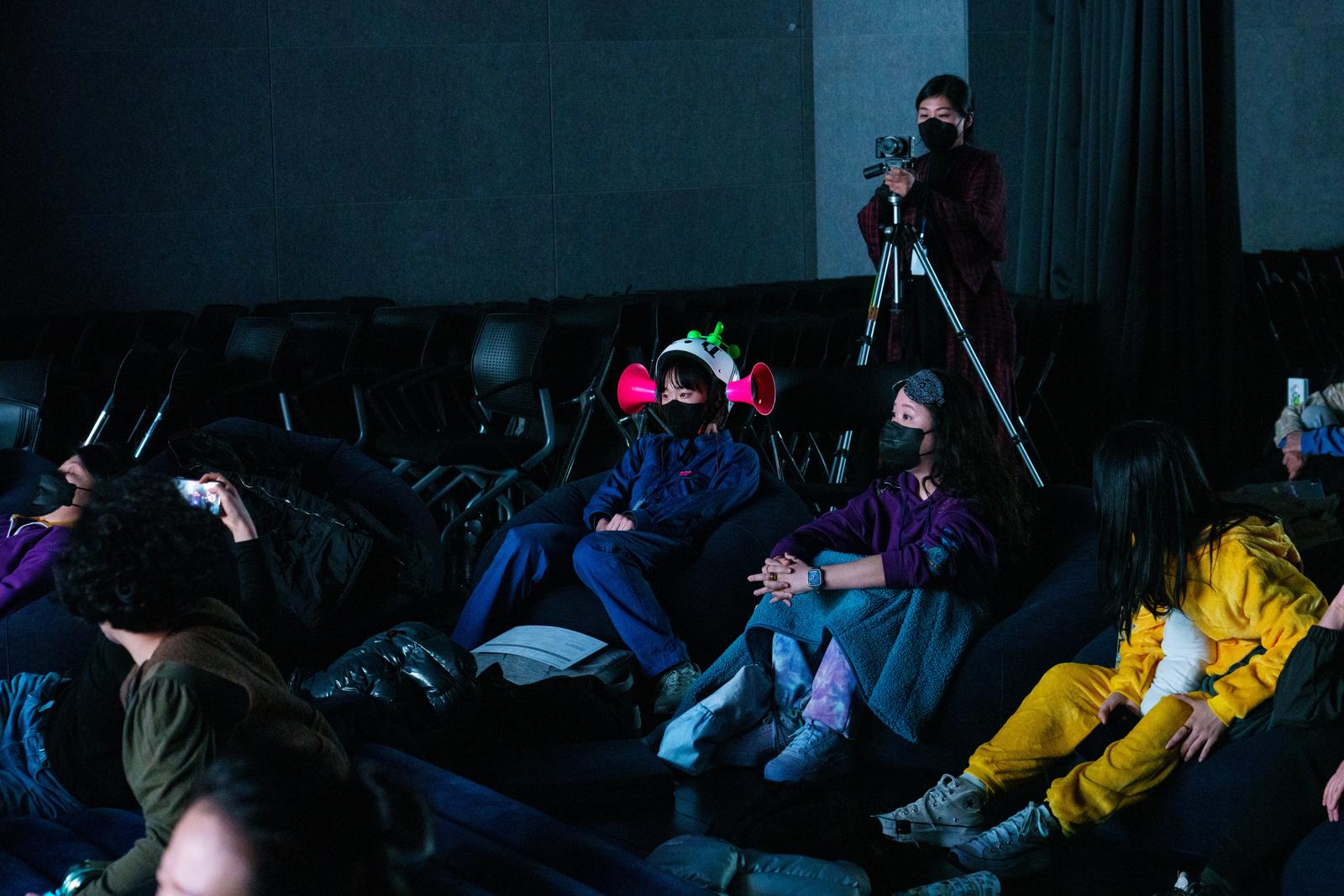
By its final movement, D: D-D-D has moved its argument entirely into the performers' bodies. Dust, first presented as a figure quantified from a distance, becomes something the two people in the room are breathing, searching for, and dancing into visibility.