Mobile version is on its way.

Visit on a desktop for now.

열심히 모바일 버전 작업 중입니다.

데스크탑에서 방문해 주세요.

ENG / 한국어

Xiren 1.0
Process Log

2026-ongoing Process Log

Through the Made in Bukseongno program, Xiren 1.0 will be developed through the collaboration with technician Gwangwoo Lee. The first version will be finished on 12 Dec, this log will document the process of production as log.

  • Saharan Dust
  • Xiren
  • DIY Tool
  • Prototype
  • Process Log
01
id: xiren-log-001 date: 2026-09-17 version: v1 (Buksungno) location: Daegu Buksungno collaborator: Gwangwoo Lee

I went to Daegu early in the morning. At MORU, the technology and art convergence space on Bukseong-ro, I met coordinator Jongmin Moon and gave a quick outline of the idea behind Xiren and the order in which I planned to build it. Moon suggested I go and see technician Kwangwoo Lee of Bento Korea. I needed to understand how a siren's mechanism turns and how its pitch is engineered. Later the pitch would also need to be controlled electronically. He was the only technician who could help with all of it.

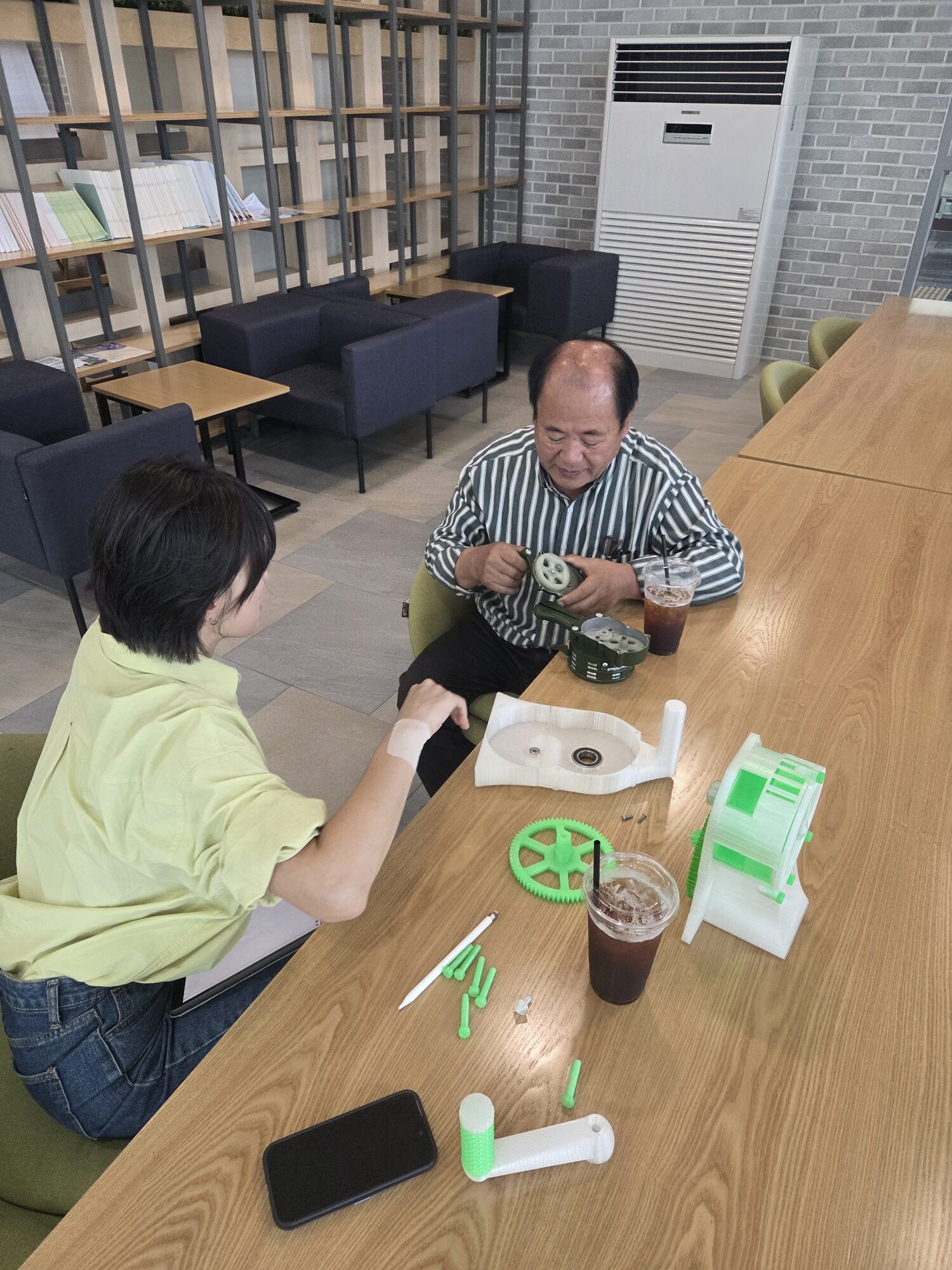
I showed the technician Xiren 0.1, the version I used in the last lecture performance, along with a hand-crank siren I had bought on Amazon, and explained the idea. Two things mattered most. The siren had to be built as an instrument. And because I want to share it as open source, we needed to split the parts that would be 3D printed from the parts that would be metal. The technician had worked with a few artists on installations before, so the process was easy to explain. Compared with other jobs he had done, a siren was on the easy side. That was a big relief.

I decided it made more sense to go through the whole process with the technician than to look around for other workshops, and that is what we agreed to do.
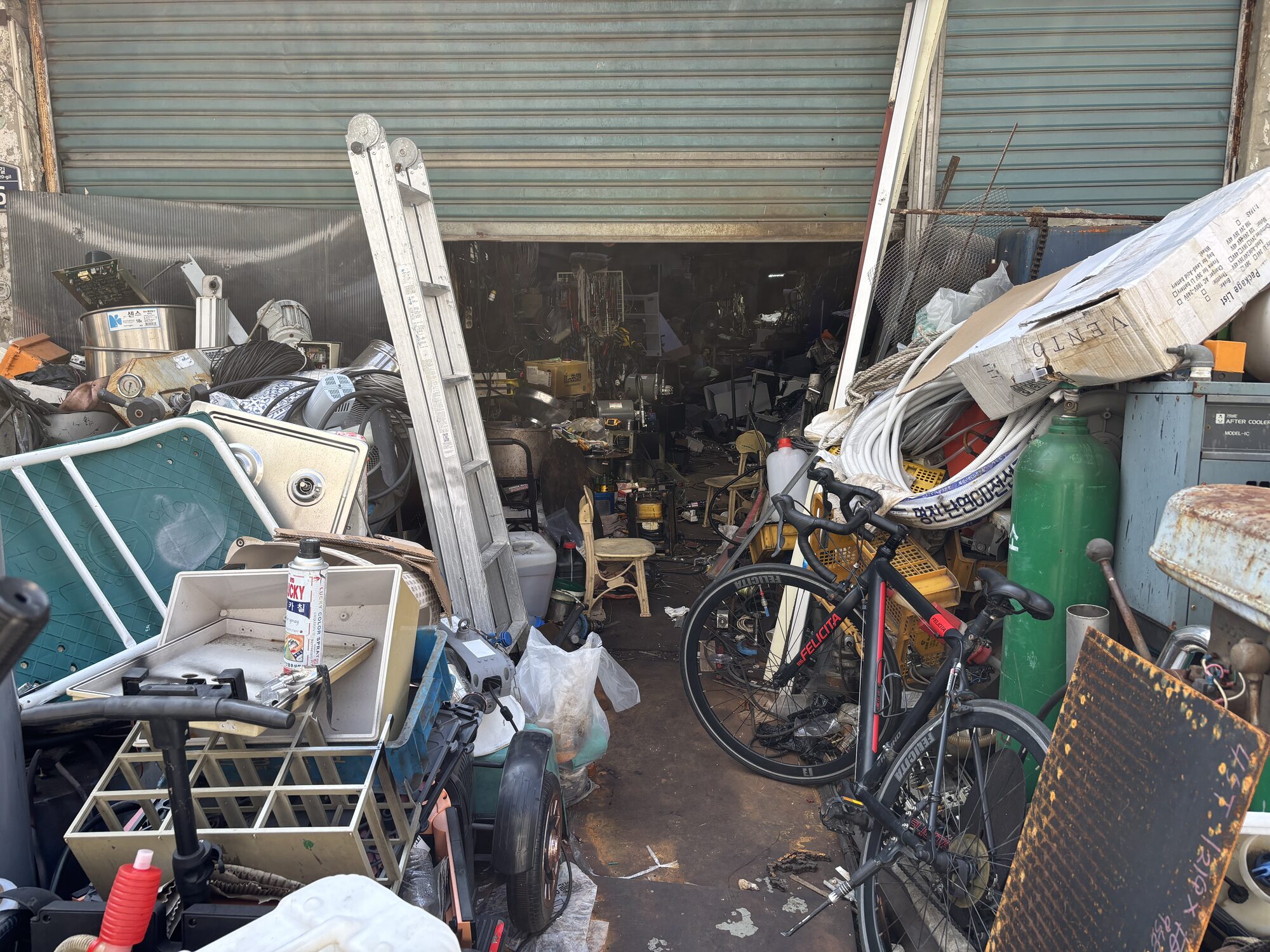
Xiren 1.0 Process Log
Bento Korea's office, or possibly their studio. The whole space has a strong cyberpunk feel.
Xiren 1.0 Process Log
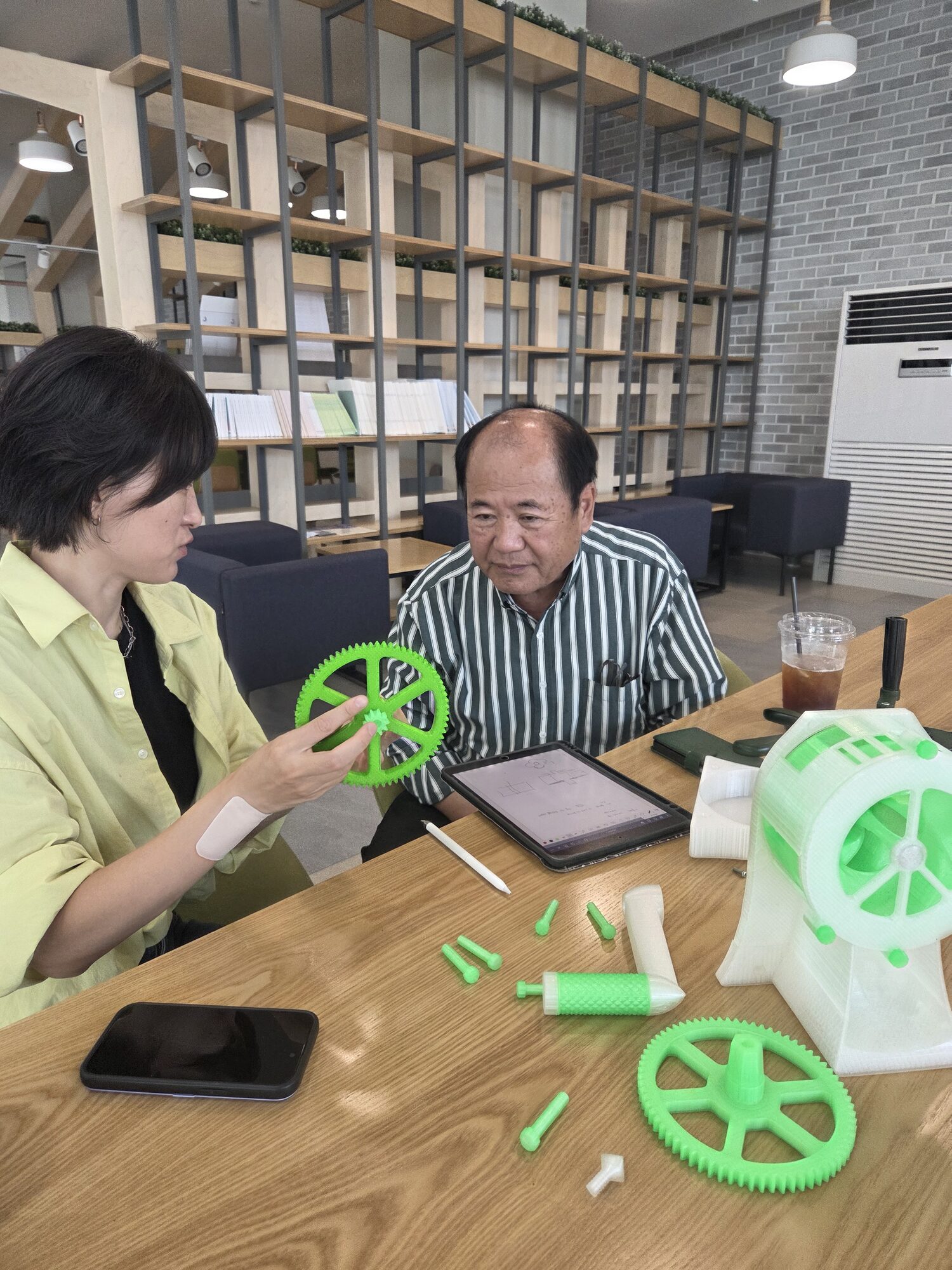
Explaining to the technician the prototype version that I made earlier (1/2)
Xiren 1.0 Process Log
Explaining to the technician the prototype version that I made earlier (2/2)
1/3
02
id: xiren-log-002 date: 2026-09-22 version: v1 (Buksungno) location: Daegu Buksungno collaborator: Gwangwoo Lee

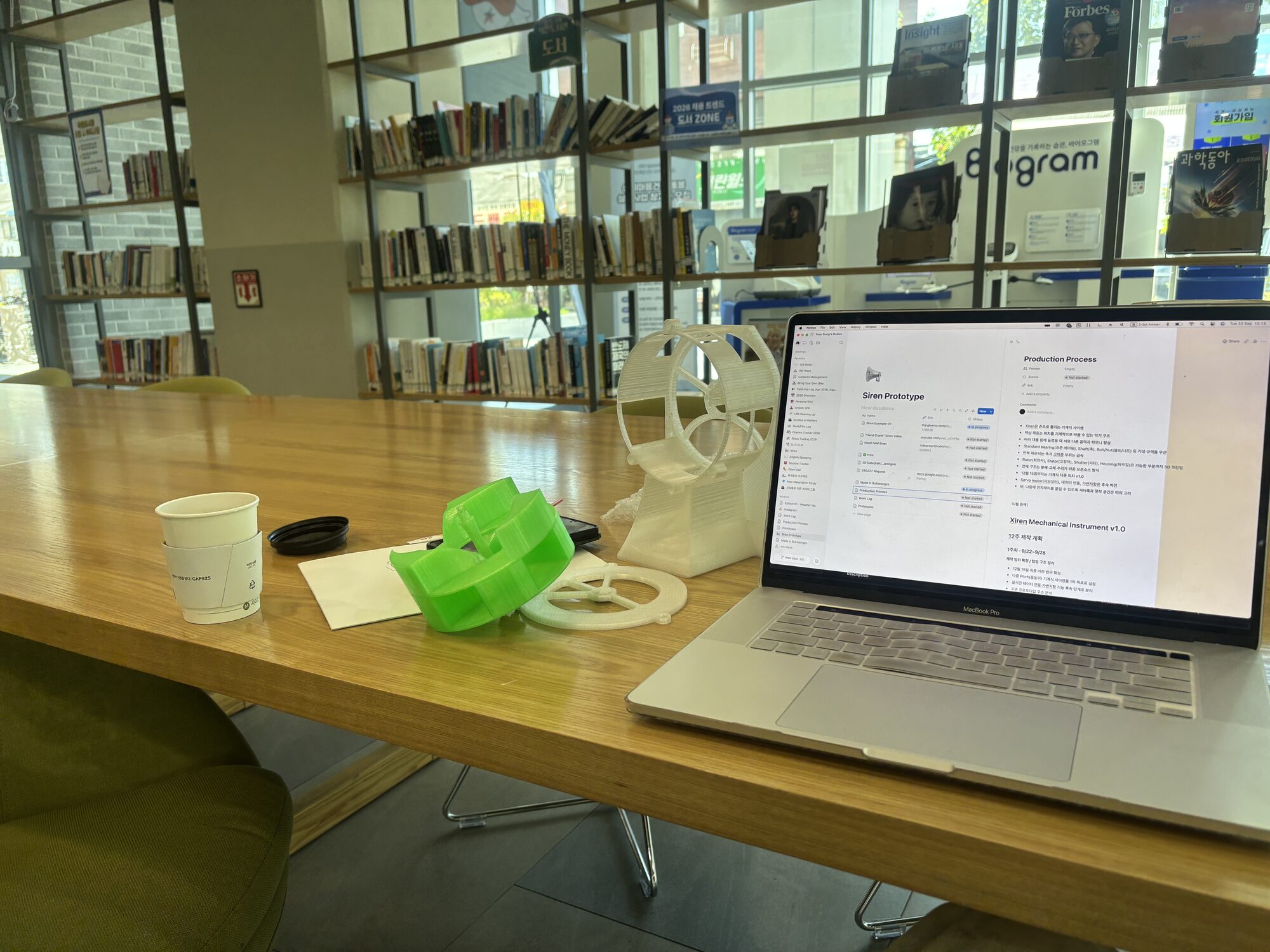
On the second visit, we laid out the work process and settled the schedule and costs for the production plan I was about to submit.
The technician had been thinking about how to make the siren work better as an instrument. He suggested a more organic shape, closer to a wind instrument like a horn. I wanted to keep the mechanism of a mechanical siren and reinterpret it from there, so I decided to stay with that approach.

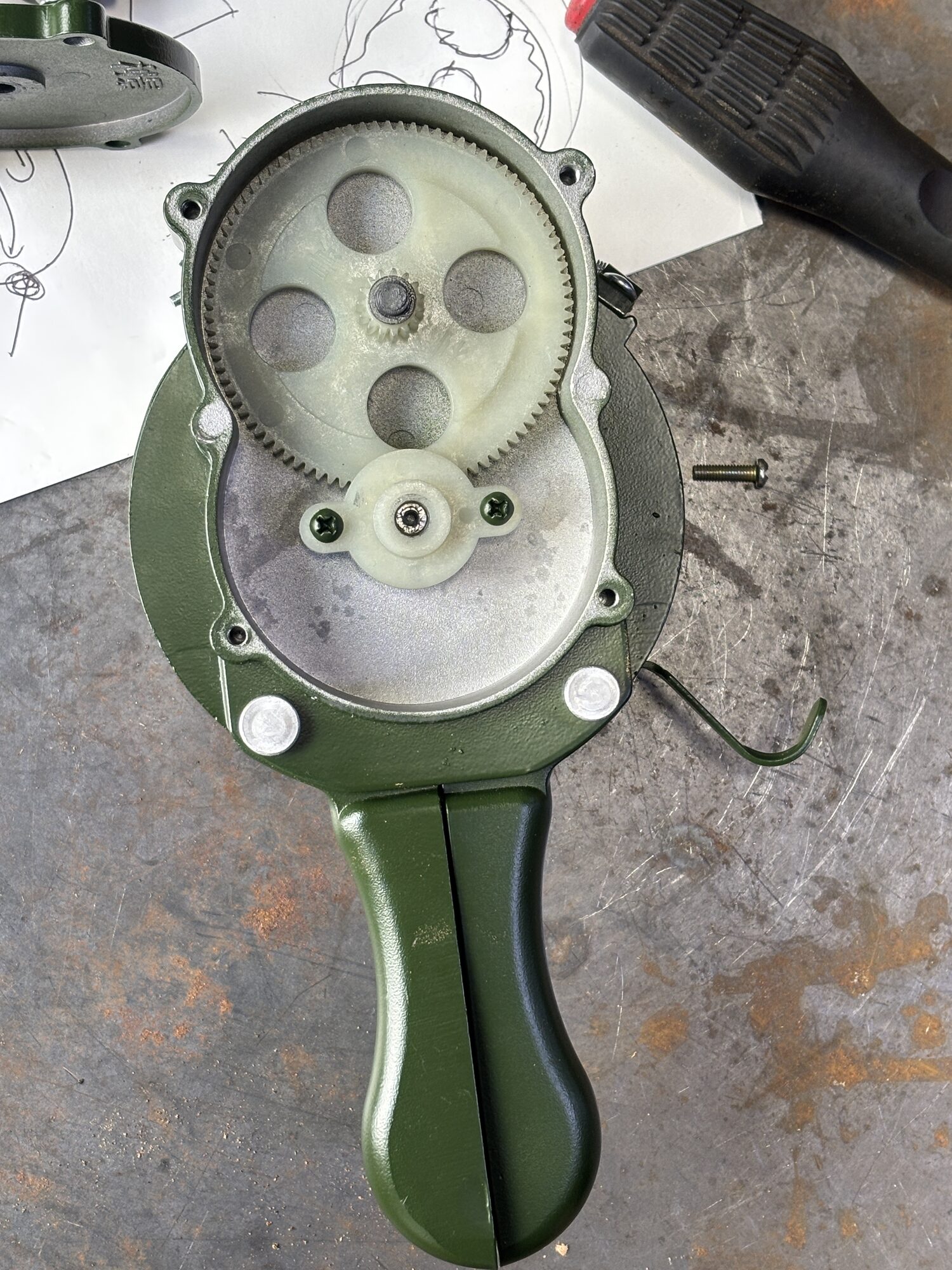
We took apart an existing hand-crank siren to see what gear system drives it. With several gears meshing in a row, the body ends up long no matter what, and I didn't like that. He suggested planetary gears, where several gears are nested and turn inside one another. It's a trickier system. But the gears can overlap instead of sitting end to end, which seemed better for the siren's design.

Before the next session, he will look further into ways of changing the siren's pitch. First we'll check whether drilling holes in the side of an existing siren, or covering them, changes the pitch in any meaningful way. Then we'll work out how to develop the siren into an instrument.

Xiren 1.0 Process Log
Discussing the production schedule while looking over the previous prototype
Xiren 1.0 Process Log
Gear mechanism of the existing hand crank siren
Xiren 1.0 Process Log
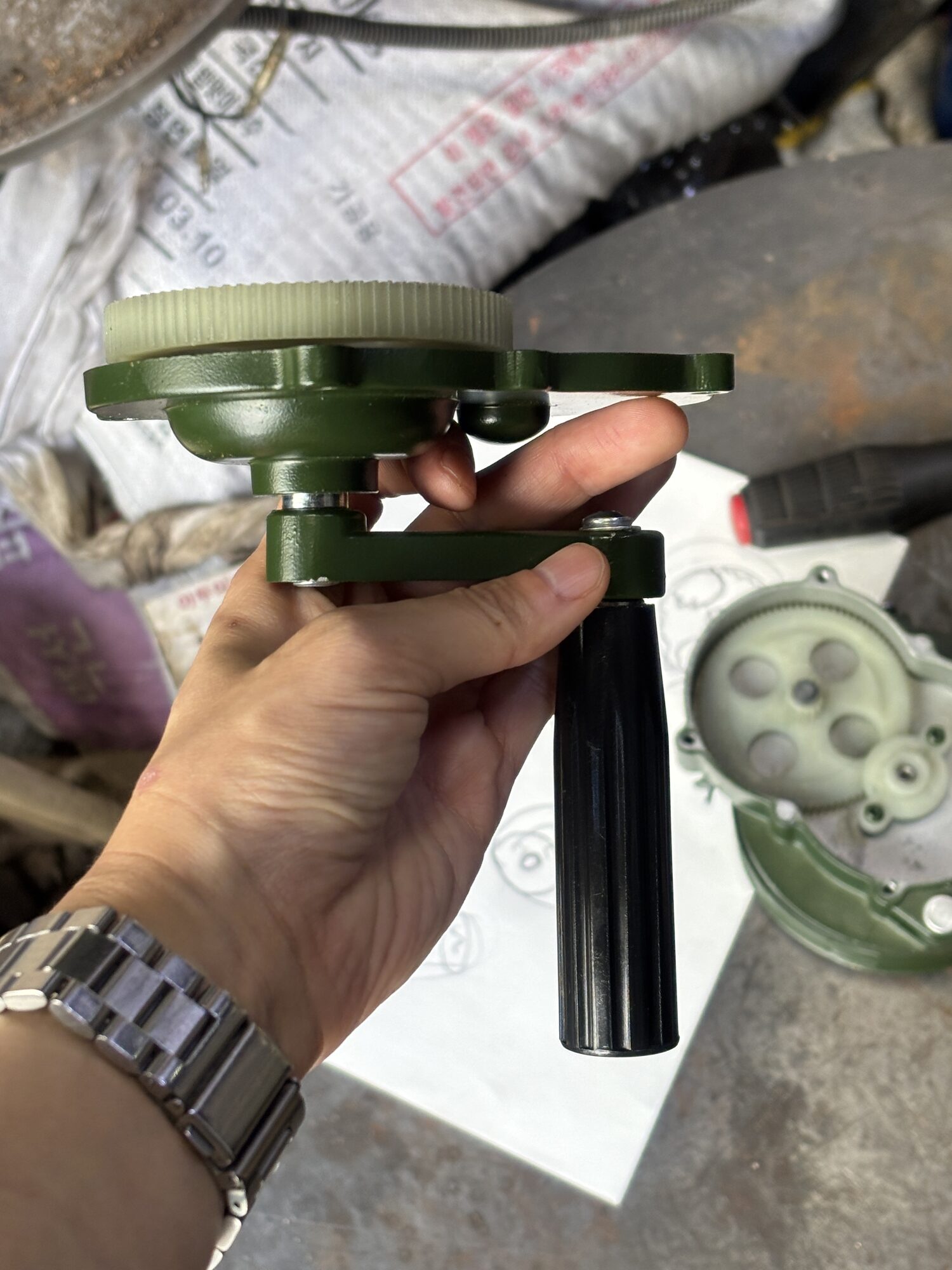
Handle mechanism of the existing hand crank siren
1/3
03
id: xiren-log-003 date: 2026-09-30 version: v1 (Buksungno) location: Daegu Buksungno collaborator: Gwangwoo Lee

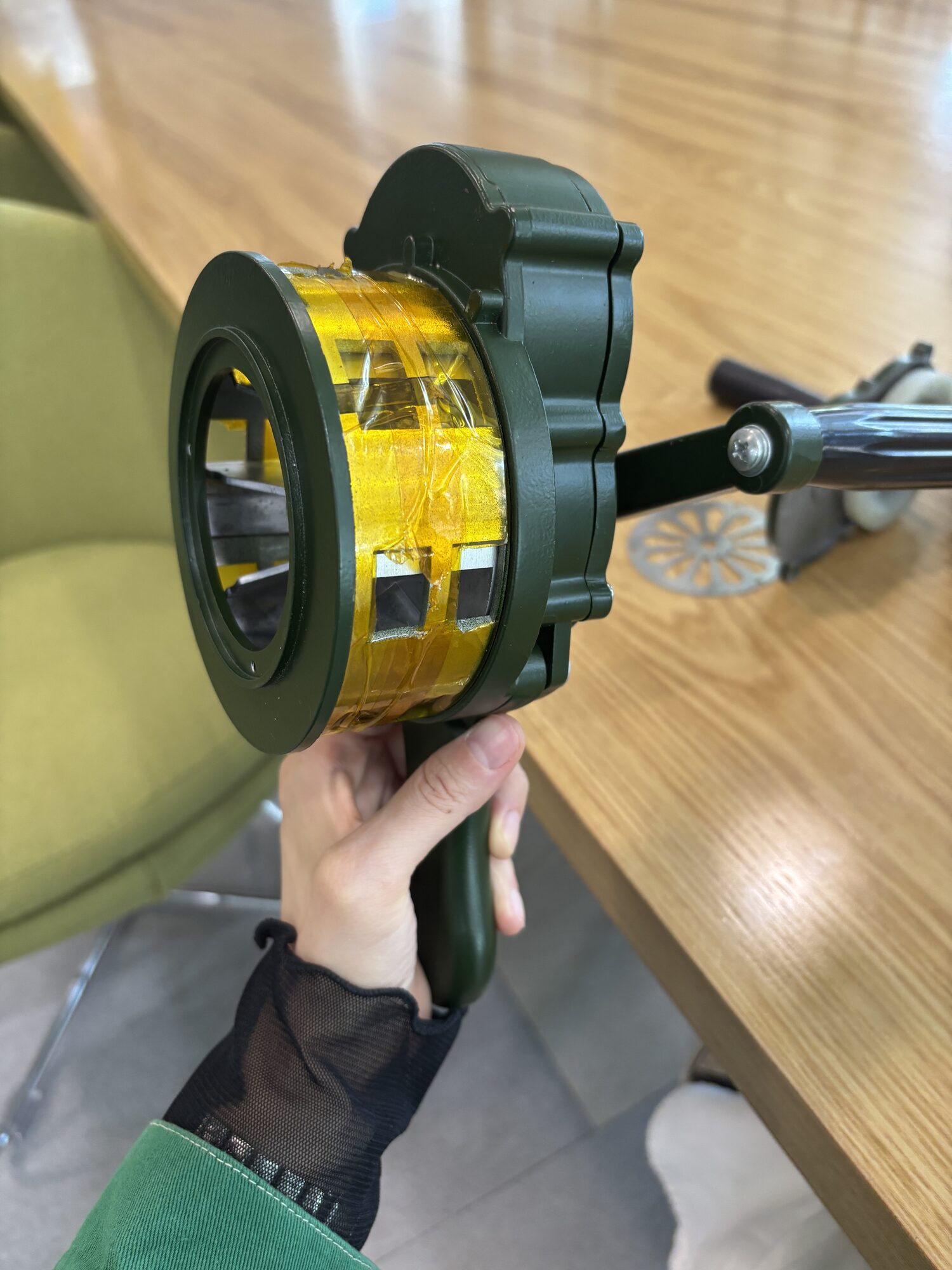
The technician and I listened to a revised version of the existing siren. On this one, the number of ports on the stator had been changed to shift the pitch. The change in pitch was clearer than I expected. We decided to keep a maximum of eight ports and to set the pitch by closing or opening some of them. Gates will open and close the ports. The director will first build the gate system in metal so we can check the pitch. If the method works for me, I'll do the 3D modeling and printing, and we'll listen to how it actually sounds. Our final agreement was that one hand holds the siren handle while the other hand opens and closes the gates to change the pitch.

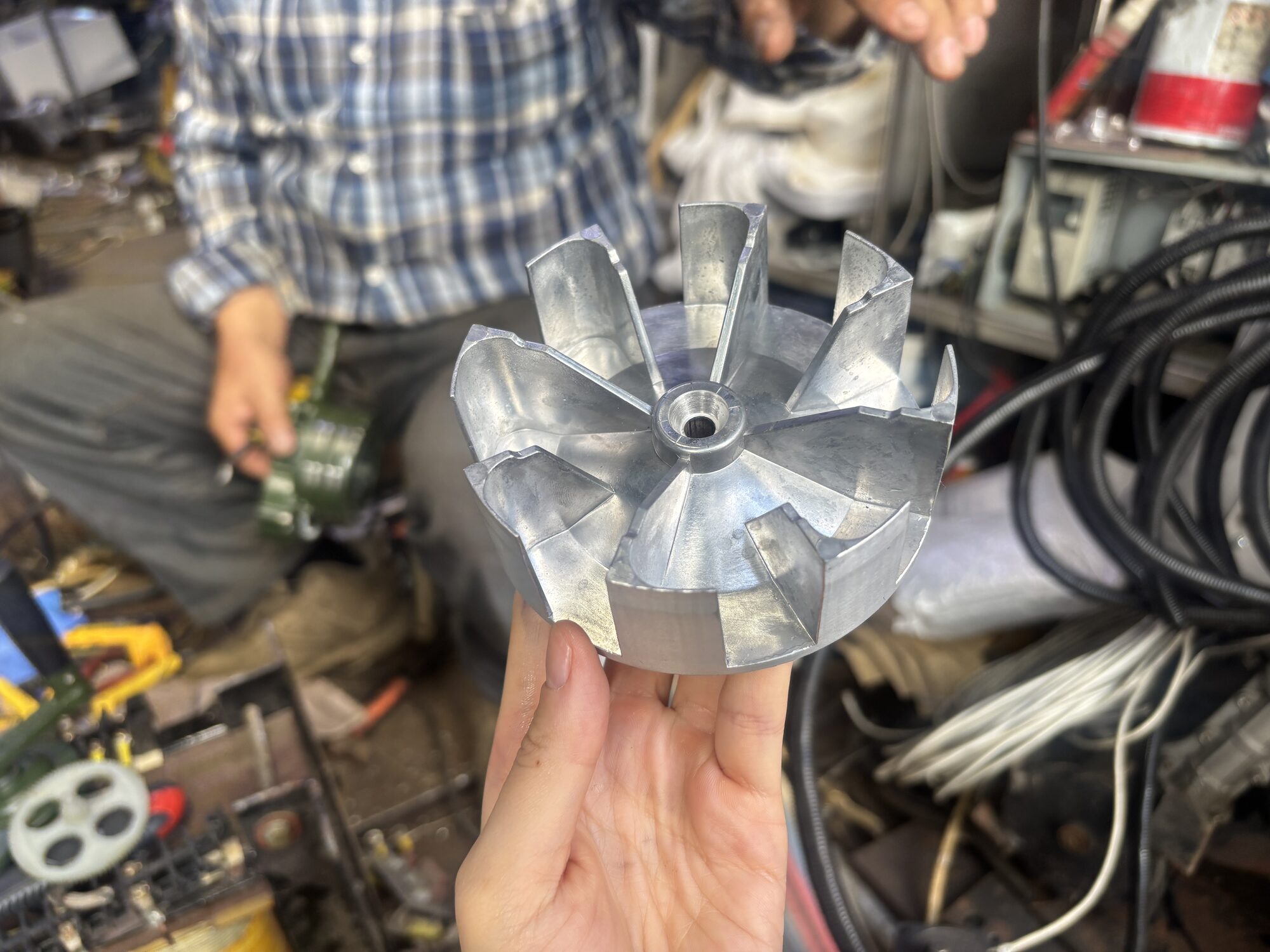
I took the existing sirens apart to work out which additional parts need modeling, and how. There are now four sirens in total. The plan is to take them apart and modify them until they get close to the siren I want. I don't much like the shape of the current rotor. I'll probably keep changing its form bit by bit until it gives the sound I like best.

Xiren 1.0 Process Log
Stator with holes drilled and then plugged, for adjusting to various pitches
Xiren 1.0 Process Log
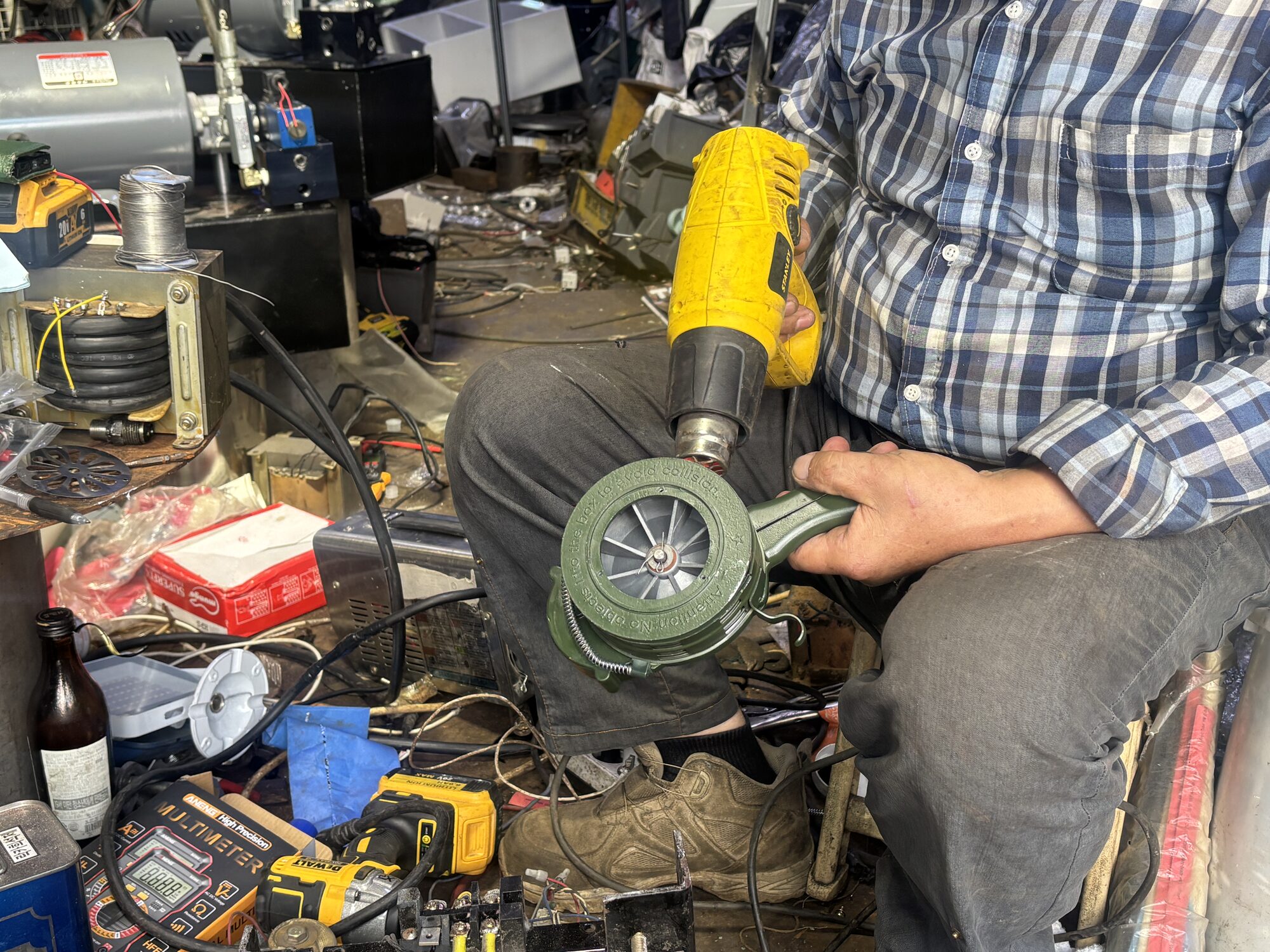
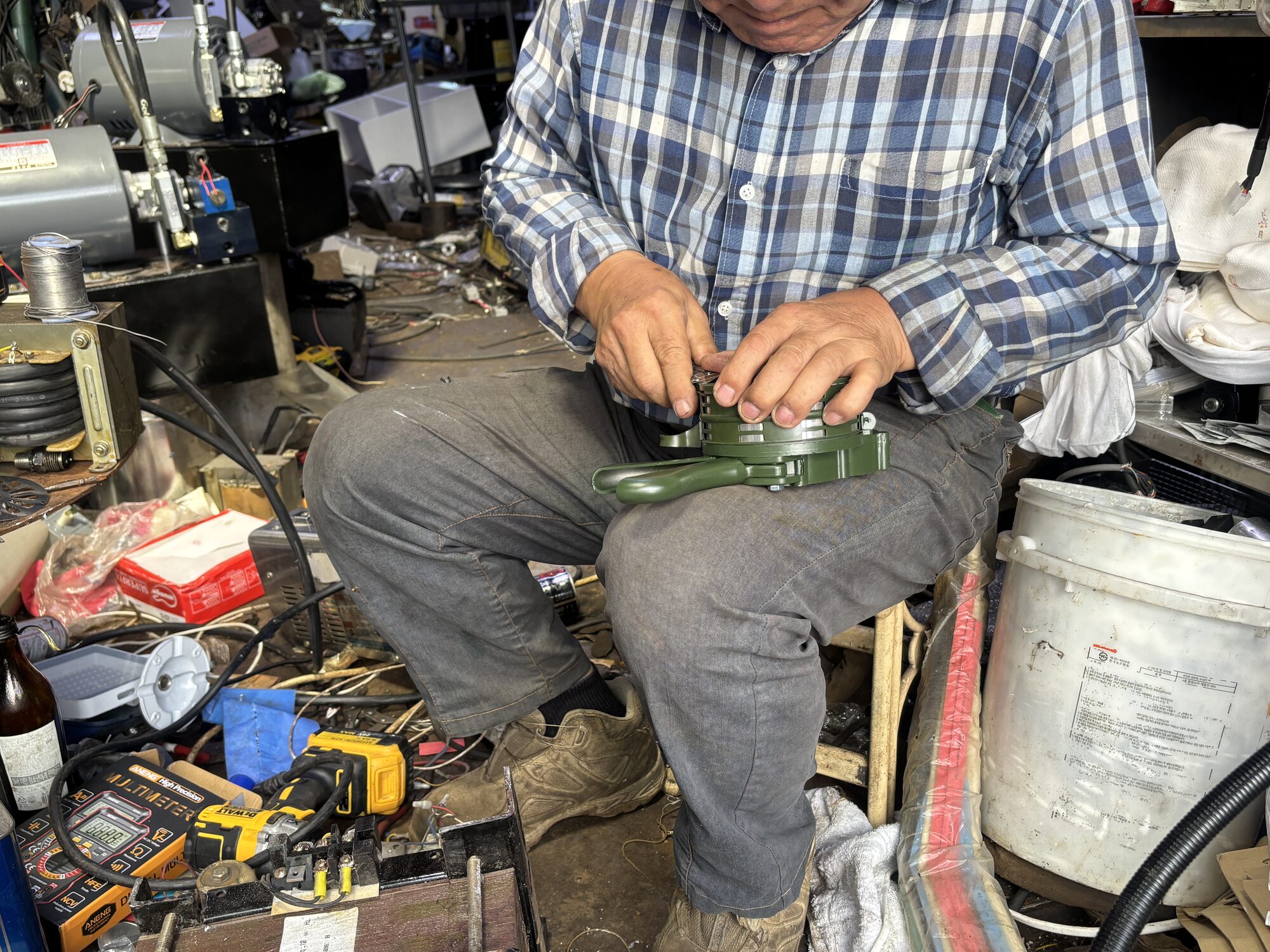
Taking apart a new siren for more varied tests (now 4 sirens in total)
Xiren 1.0 Process Log
Taking apart a new siren for more varied tests (now 4 sirens in total)
Xiren 1.0 Process Log
The disassembled rotor Planning to modify this shape again, model it, and print it with a 3D printer
1/4